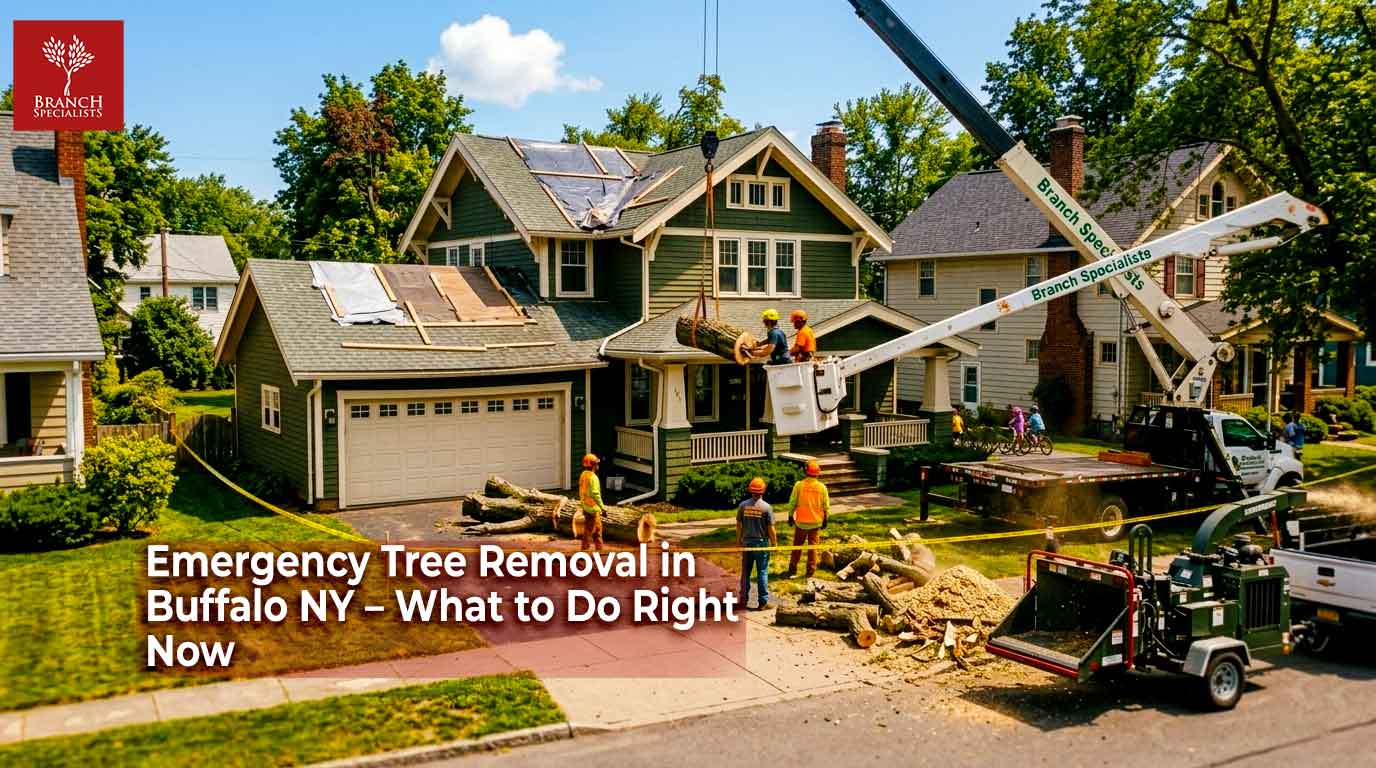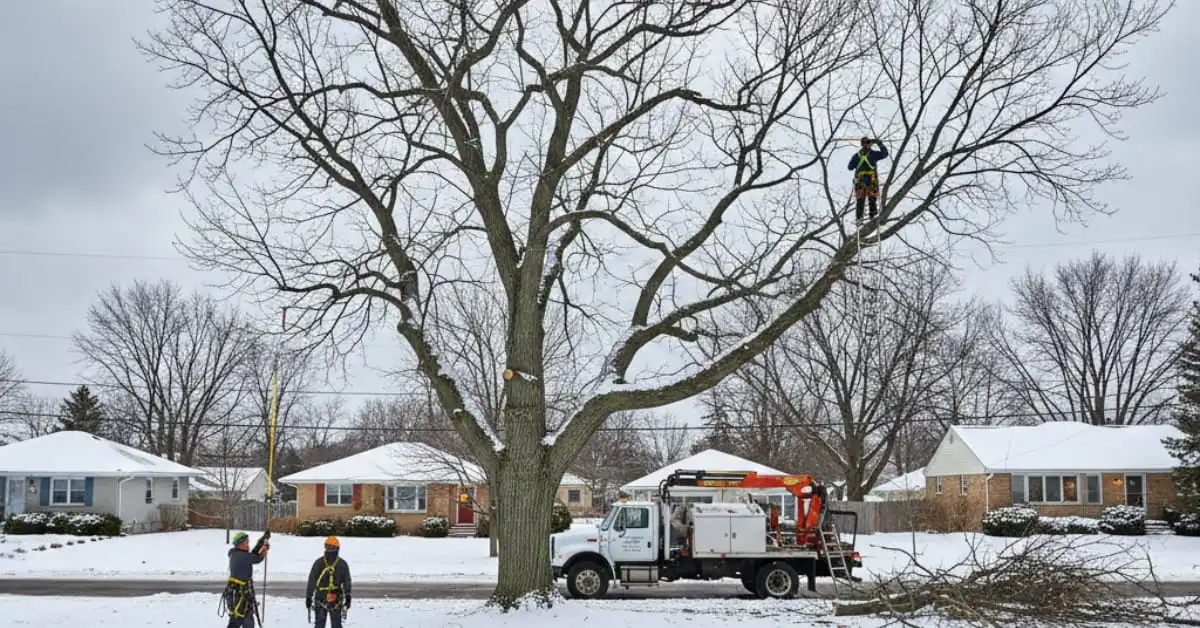
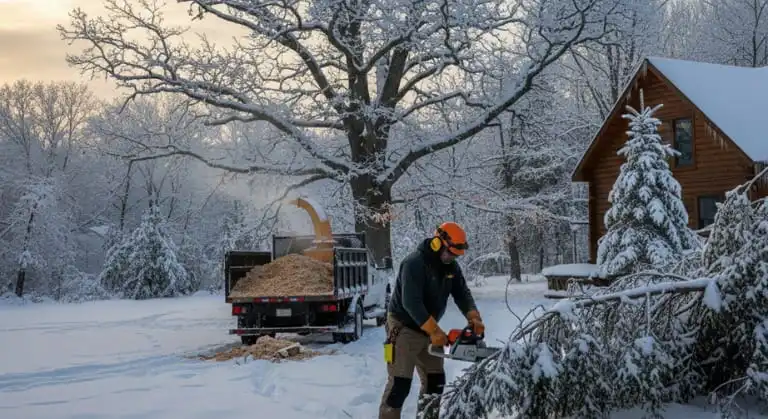
Buffalo winters are characterized by heavy snowfall, cold temperatures, and severe lake-effect snow. Although snow landscapes may be attractive, they also pose severe threats to the residents.
One hazard most common in western New York during winter is damage to trees due to heavy snow. The effect of snow on the trees, as well as ice and the wind, may lead to the failure of a tree branch or even a tree without prior notice.
This is the area where professional tree service in Buffalo experts will be key contributors in assisting citizens to save houses, cars, and families during winter.
How Heavy Snow Impacts Trees in Buffalo
Buffalo is worse in terms of snow load on tree branches. The lake-effect snow results when cold air travels over the warmer waters in Lake Erie, and it collects the moisture. This moisture is heavy, localized snow on adjacent land, and may occur at a very high rate and in large quantities.
During the lake-effect storms, trees may be stressed because the load of snow on tree branches grows quickly, forcing the possibility of breakages, leaning, or complete collapse of branches.
- Heavy, compact snow is more than dry powder and is more stressful.
- Ice deposition contributes to additionalness and inflexibility.
- Branch structure is undermined in repeated freeze-thaw cycles.
These factors ultimately cause cracking, splitting, and concealed structural weakening. Most instances of snow-damaged trees by the Buffalo homeowners start way before the snow.
Identifying Hazardous Trees Before Snowfall
A major reduction of winter risk can be achieved by identifying hazardous trees before snow before the snow falls. Seated monitoring can help to avoid emergencies.
- Branches that are dead or dying and which can not bend under snow.
- Trees that have visible cracks or have fallen in a past storm.
- The leaning trees have weak root systems.
- Growing canopies that trap and store snow.
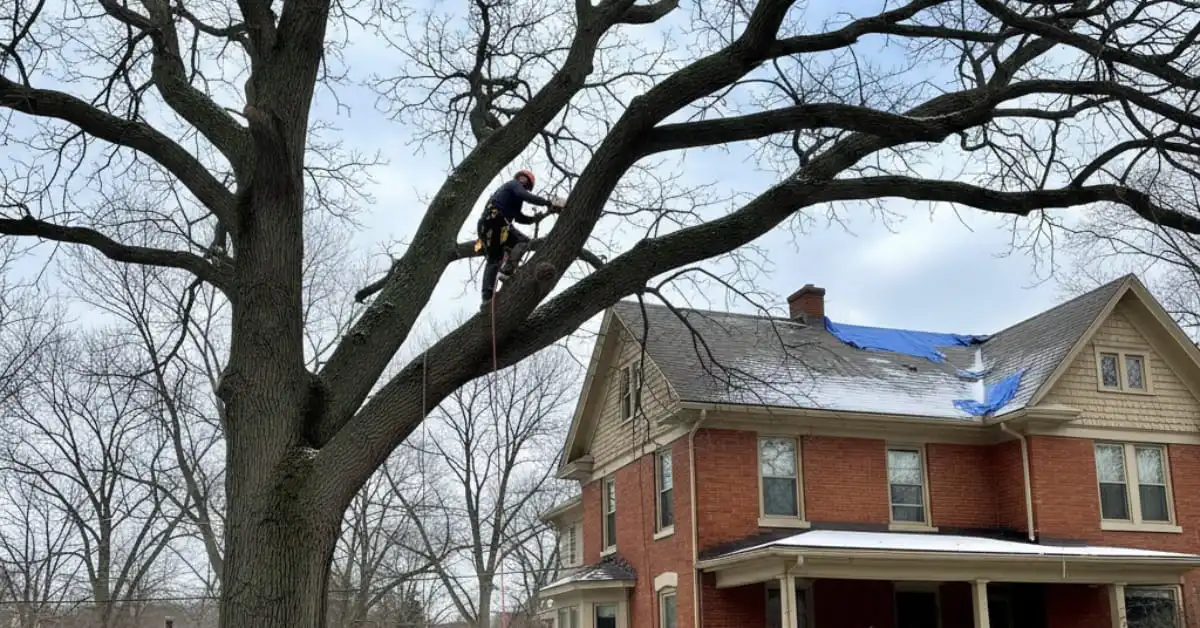
- Trees near roofs, power lines, or driveways.
Early detection means a large amount of odds against the unexpected tree damage Buffalo residents are exposed to during storms.
What Types of Trees Are Most Likely to Fail in Snow?
Certain trees are inherently more susceptible to large amounts of snow, in particular, those of Buffalo. The knowledge of what trees are most likely to fall in snow will enable homeowners take preventive measures before the storms can inflict severe damage.
The trees that grow fast are normally of weak wood that is not in a position to hold the weight of the snow onto the branches of the trees. Typical examples in Buffalo are silver maple, poplar, willow, and boxelder. Such trees grow huge branches in a short time, hence are likely to break down during heavy snowfalls.
Trees that have narrow or V-shaped angles of branches are also more at risk. This structure enables the snow and ice to be concentrated at the points of junction of branches, resulting in more pressure and splitting. Trees like Bradford pear, red maples, and ornamental cherry are common species that display signs of winter storm damage after protracted snowfalls.
Trees that have gone old and have internal decay have concealed hazards. Although they are not sickly, decay decreases strength and flexibility. Oak, ash, and maple trees that are mature may suddenly fail in limbs or trunk under the weight of the snow.
Shallow-rooted trees such as spruce, pine, and birch find it difficult when the soil is frozen. Frozen ground undermines anchoring, which enhances the tendency to lean or uproot. During heavy snow, trees that are stressed by drought, pests, or disease are particularly susceptible to damage due to heavy snow, even seemingly healthy during summer.
Common Signs of Winter Storm Tree Damage
By identifying the damage at the initial stage, bigger failures can be avoided in the later part of the season.
- Dangling and partially fractured limbs.
- The tree is leaning after the storm.
- Exceedingly bend in high winds.
- Crack and splitting sounds.
- Splits in the trunk.
- Reduced canopy symmetry.
These are apparent winter storm tree damage signs that require professional evaluation.
How Tree Service Buffalo Helps Protect Homes
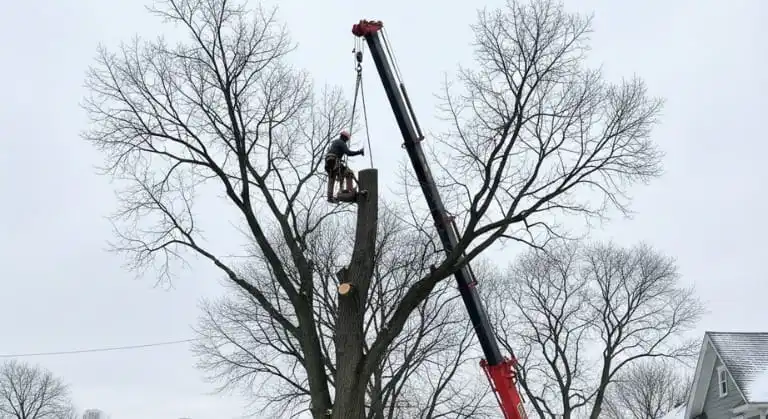
The professional tree service Buffalo teams offer winter-centered services, aimed at reducing the snow-related risks.
- Pruning of structures to minimise snowfall.
- Crown thinning to reduce wind resistance.
- Removal of dead or weak limbs.
- Bracing and cabling of weak trees.
- This is the prevention of high-risk trees.
There are companies such as Branch Specialists Buffalo that specialize in preventative care and enable homeowners to save on the bills that would be spent on fixing damaged houses due to falling branches or trees that have been uprooted.
Preventing Tree Damage in Winter Through Professional Care
It is not enough to react to a storm and prevent damage to trees that will happen in winter.
- Pruning in the seasons prior to heavy snows.
- Examination of tree health during late autumn.
- Root-zone and soil inspections.
- Observing trees following early snowfall.
- Remove dangerous trees before storms.
Such a forward-looking action will greatly minimize any tree damage caused by heavy snowfall and cover up adjacent buildings.
Should You Remove Snow From Trees?
One of the questions that many homeowners have to ask is should I remove snow from trees? The response is dependent on the context.
- The airy and featherlike snow would fall away.
- Dull, thick, wet snow cannot be violently shaken.
- Shoveling snow is even worse.
- Poor use of tools may damage the bark and buds.
It is more prudent to leave the task of taking care of snow to tree experts who have been trained on how to do it during winter.
Can Frozen Branches Fall on My Roof?
Yes, because.
- Wood is frozen, and it breaks easily.
- The weight of the snow adds loads to the hanging branches.
- Cracking is brought about by sudden changes in temperature.
- The damages on the roofs usually happens at night.
This danger shows the relevance of winter pruning with the help of experienced tree service in Buffalo.
Additional Ways Tree Services Protect Buffalo Homes
Professional services provide long-term security besides emergency storm response.
- Future winter risk assessment.
- Replanting of trees with snow-resistant plantations.
- Continuous observation in the season.
- Information on how to cover the trees with heavy snow.
- Winter property management education.
This holistic strategy will provide all-year-round safety, not only in storms
Conclusion
Severe snowfall is an inevitable aspect of life in Buffalo, though severe property damage does not necessarily follow.
The knowledge of the signs of tree damage in winter storms and the investment in professional care are all critical in protection. Homeowners can be kept safe throughout the severe winter season with proactive inspections, strategic pruning, and emergency tree services Buffalo.
Reliable treatment providers such as Branch Specialists Buffalo can be counted on to make sure that your trees are treated as an asset rather than a liability, even in the most severe season of snowfall.
FAQs
Q1:Which trees are the most susceptible to winters in Buffalo?
The trees most susceptible to snow damage are the young, fast-growing, and the old and rotten trees.
Q2:What should I do to determine whether my tree is safe or is dangerous after the snowfall?
Search for slanting, broken trunks, suspended branches, or abrupt changes in the canopy.
Q3:Is it essential to hire a professional winter tree care service?
Yes, professional care eliminates the chances of emergency and future damage to property.