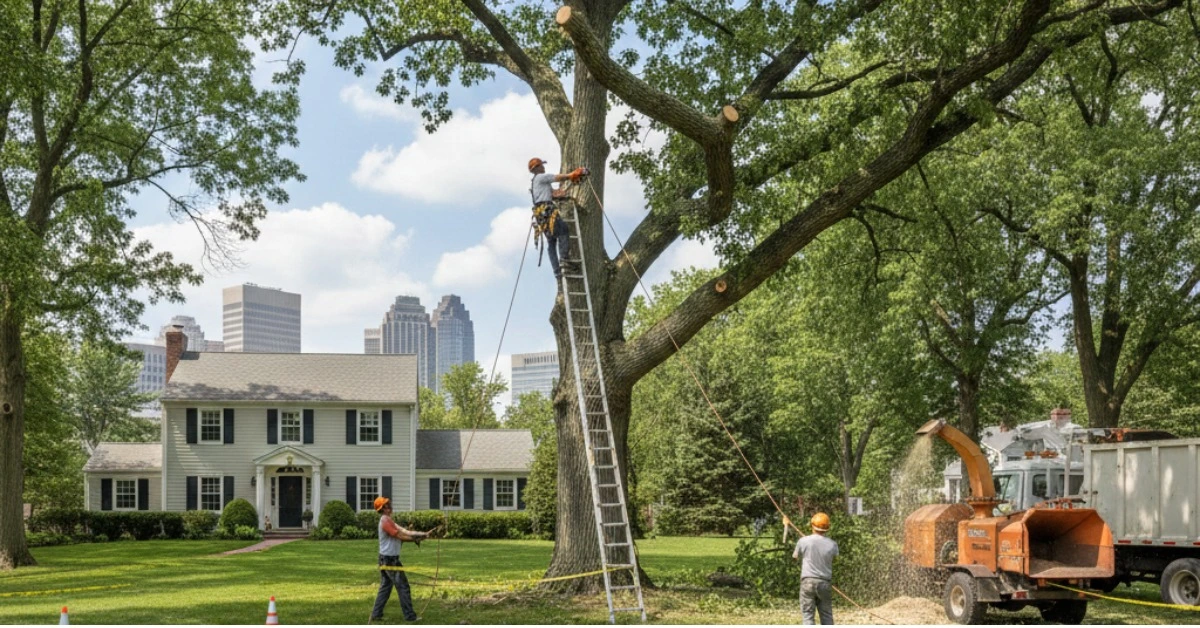
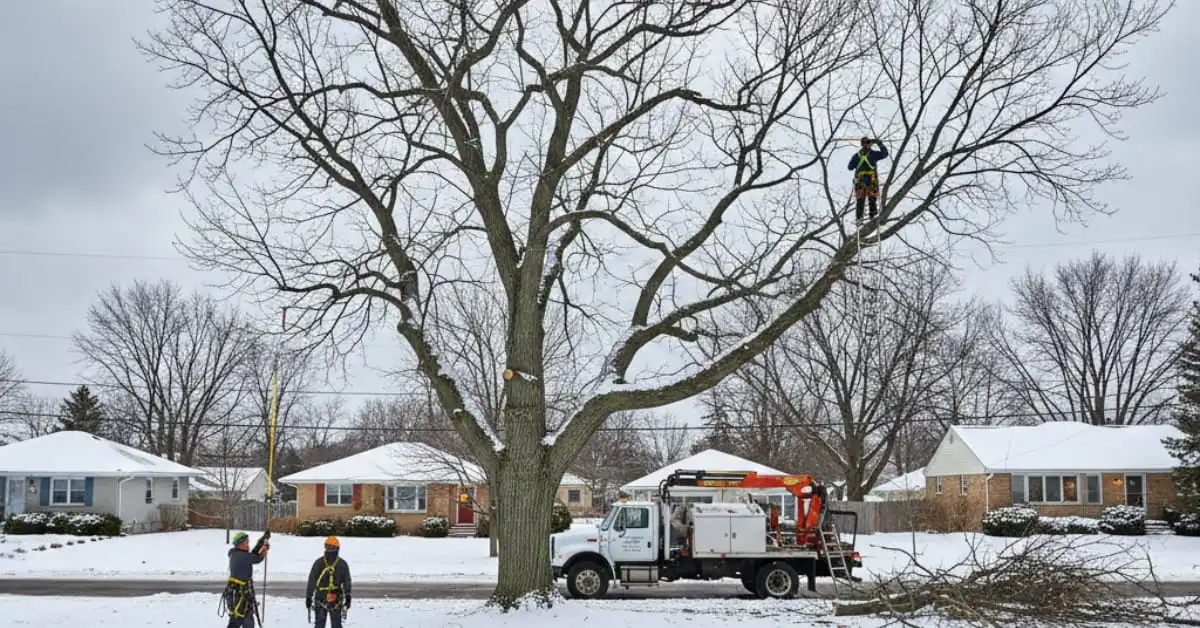
Wondering how to prevent tree damage due to storms? We know winter snows in Buffalo are inconvenient, but they are not only that; they are hazardous. Strong lake-effect winds, heavy snow, ice accumulation, and frozen soil cause massive pressure on trees. Trees that have a healthy appearance may turn out to be dangerous if they are not ready to face the extreme winter.
Trees are a neglected source of risk that is often overlooked by homeowners who are interested in snow removal. The winter tree damage prevention in Buffalo can be provided with the assistance of professional tree service in Buffalo, NY, to ensure your property is safe.
This detailed blog from Branch Specialists identifies the reasons behind the necessity of caring about the trees in winter, provides instructions on identifying dangerous trees, and offers tips on avoiding damage to homeowners in Buffalo.
Why Winter Tree Care Matters in Buffalo
The Nature of Buffalo Winters
The winters in Buffalo are very long, bitter, and unpredictable. More challenges of trees are:
- Heavy lake-effect snowfall- Snow will settle on the branches, adding weight and breaking them.
- Ice storms- Ice causes much weight, particularly to trees that have thick or unbalanced canopies.
- Freeze-thaw cycles- Repeat freeze/thaw cycles may crack trunks and cause weakening of roots.
- Powerful winds- Winter winds, through the frozen or wet soil, may cause loss of trees.
A small structural flaw in trees would result in serious dangers during a storm. Homeowners often ask us the question How do winter storms affect trees in Buffalo and the answer is simple: snow and ice significantly exert stress on branches and trunks, which means that ensuring the tree’s safety before winter storms is a must.
Results of Neglected Tree Care
Unmaintained trees may lead to property damage and danger,
- Snapping branches cause roofs, fences, and vehicles to be damaged by the fallen branches under the pressure of snow and ice.
- Sudden failure of eaning trees.
- Fissures and radiations in trunks get worse during freezing periods.
- The branches may fall and cause power lines to fall, which poses a danger to the entire community.
Preparing trees for heavy snow is an aspect that is usually ignored, and the result is a skyrocketing cost of repairing storm-damaged trees after winter storms in Buffalo. Preventative tree management saves on risk and expenditure.
Signs Your Tree Might Be a Winter Hazard
It is important to detect the warning signs prior to the occurrence of winter storms. The homeowner should look out for the following signs that a tree may fall in winter,
- Dead or dying branches- Dead wood is brittle and breaks easily under the influence of snow. Elimination of these branches averts abrupt disintegration.
- Cracks in the trunk or large branches- Cracks are signs of internal weakness, which is aggravated by contraction of the wood when it is frozen.
- Leaning trees- Leaning implies instability of roots. The tree can easily topple when the soil freezes.
- Dense or imbalanced canopy- This is due to uneven weight, which will break the branches due to the weight of the snow or ice.
- Rot or fungal growth- Rot causes the internal wood to be weak, thus the trees become prone to breaking.
- Exposed or damaged roots- Roots that are not insulated will tend to fail under freeze-thaw cycles.
- Damage by previous storms – Trees damaged by earlier storms might also contain defects, which may increase risk in the next storm.
- Huge branches surrounding buildings- Branches that grow around houses or garages may damage them in the case of heavy snow or ice storms.
It is important to learn about the warning signs of weak tree branches to avoid any accidents and minimize the costs of repairs in the future.
What Homeowners Can Do Before Winter Storms to Prevent Damage
Preventive tree management is concerned with tree strengthening, risk mitigation, and removal of unsavable trees. There are a number of solutions that can be counted on by the homeowners in Buffalo using professional services.
Buffalo Tree Health Assessment
A tree health assessment by a professional measures
- Weaknesses of the structure of the trunk and branches.
- Indications of illness, wear, or infestations.
- Risky branch formations.
- Root health and stability.
This evaluation enables the homeowners to know what trees to trim, cut, or prop. Emergencies can be dangerous during a storm, which can be prevented by catching potential hazards at an early stage.
Soil Care
Good root systems depend on healthy soil. Before winter, soil management may include,
- Enhancing drainage- Will not allow water to accumulate around roots that will be frozen and damaged.
- Mulching- Aids in covering roots and controlling soil temperature.
- Aeration- Minimizes compaction, permits oxygen and nutrients to access roots.
- Fertilization (where required)- Ensures that trees are provided with the nutrients required to survive the winter stress.
Healthy roots make trees more stable in the blistering winds, and heavy snow supports the tips of trees in storm damage prevention.
Buffalo Tree Removal
Some trees cannot be saved. Removal may be justified in certain cases.
- The tree is dead, dying, or very much decadent.
- The damage to the structure is too serious to be repaired by pruning or cabeling.
- The tree is a threat to houses, cars, or electrical cables.
The professional tree removal services help to avoid any emergency cases in winter storms.
Buffalo Tree Trimming and Pruning
Effective trimming limits the amount of snow and ice that accumulates on and enhances the structural balance. Some of the pruning techniques involve,
- Crown thinning- Removes chosen branches to make it less wind resistant and less heavy.
- Crown cleaning- Removes dead, diseased, broken limbs.
- Structural pruning- Remedies defective branch unions and abnormal growth forms.
- Directional pruning- Directs the growth out of houses, roofs, and power lines.
- Pollarding or topping (only in special cases)-Removes total height but does not damage the health of trees.
The right timing of the tree trimming in Buffalo before winter makes the trees stronger, less dangerous, and guarantees a safer environment around the property. The homeowners can also be informed how to prevent tree damage from snow by the experts.
Buffalo Crown Reduction
The height, as well as the spread of a tree, is reduced, maintaining the natural shape of a tree with crown reduction. Benefits include,
- Reduced wind resistance.
- Reduced snow and ice levels.
- Reduce feebly connected branches.
It is a service that is especially helpful for mature trees, especially around houses, driveways, and walkways.
Root Care
The stability of trees depends on healthy roots. Root care may include,
- Root collar excavation: It exposes the roots that are buried to observe any disease or damage.
- Root pruning: The elimination of diseased, encircling, or penetrating roots.
- Aeration and soil treatment- Enhancing nutrient and oxygen circulation.
This is a crucial measure of preparing trees for heavy snow since strong roots keep the trees stable during snow or ice storms.
Buffalo Tree Cabling and Bracing
Internal support is given by cabling and bracing.
- Weak branch unions.
- Split trunks.
- Heavy or extended limbs.
The existence of support systems minimizes movement of the branches in the case of high winds, thus avoiding the expensive damage or the falling of the trees.
Seasonal Maintenance Buffalo
Regular seasonal tree service in Buffalo guarantees,
- Trees are well-balanced and healthy throughout the year.
- Other small problems are resolved before they become big.
- There is no danger to homes and landscaping in winter storms.
The best approach to the safety of the trees before the winter storms is consistent care.
Why Hire a Professional Tree Service?
The work with winter trees is complicated and even hazardous. The providers of professional tree service in Buffalo provide,
- Knowledge in determining latent structural hazards.
- Good pruning practices promote the health of trees.
- The safe work with big trees and dangerous situations.
- Emergency situations and expensive damage to property are prevented.
Home tree jobs can be cheaper in the short term, but can generally lead to poor cuts and structurally unsteady trees, and can cause more hazardous conditions and liability in a winter storm. You can access all the above three services from Branch Specialists for a stress-free winter.
Final Thoughts
The winters in Buffalo are quite severe, and with proper attention to trees, it is possible to significantly decrease the amount of damage due to storms. Homeowners can prevent damage to their property by identifying danger signs, keeping trees healthy, and seeking professional services like pruning, root management, cabling, and removal.
The winter tree damage prevention in Buffalo is not only about weathering a storm but about making some safer, stronger trees every year.
The preparation of trees in advance will help to have peace of mind that the property of the Buffalo homeowners is safe, all expenses of the emergency are reduced, and the trees are safe and beautiful during the coldest days of the year. The professional tree services in Buffalo would help to make this amount of protection attainable.
FAQs
Q1:When should winter tree pruning be done in the city of Buffalo?
It is best in late fall, when the first heavy snow has not fallen. The trees are inactive, and pruning will minimize the risk of storm damage without subjecting the tree to stress.
Q2:Is it possible to have a tree that looks healthy but at the same time, be dangerous in winter?
Yes. Root instability, internal decay, and concealed cracks can not be seen but cause a limb or trunk failure under snow and ice.
Q3:What is the frequency of inspections on trees in winter?
Annual inspections, preferably during late fall, serve to determine when to inspect trees before winter to allow tree storm damage prevention tips to be put in place in time.
Q4:What trees are most likely to fall in snowstorms?
Mature old trees, pest-infected trees, trees with trunk cracks, trees with root issues, leaning trees etc.,