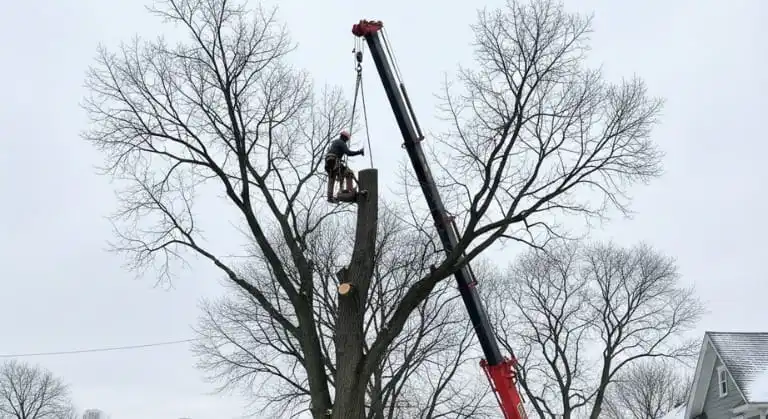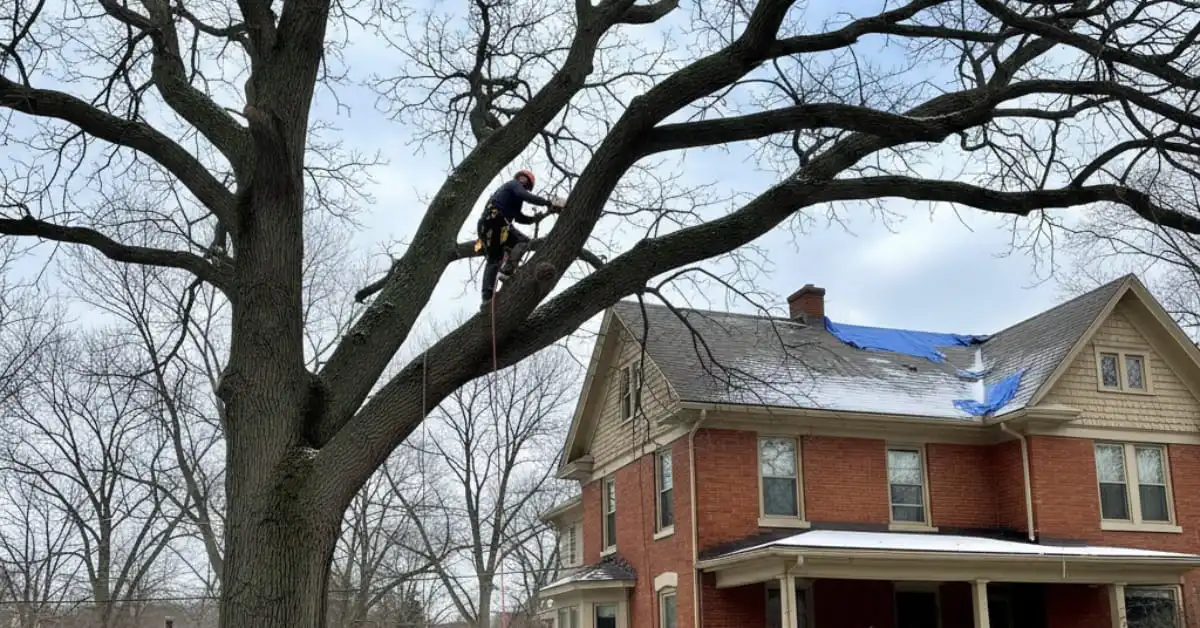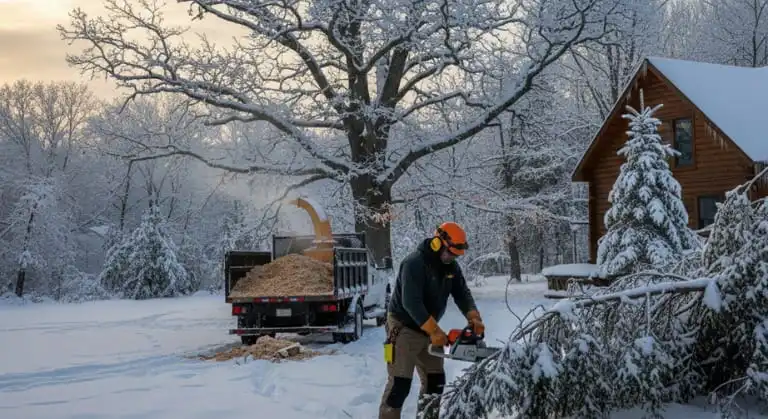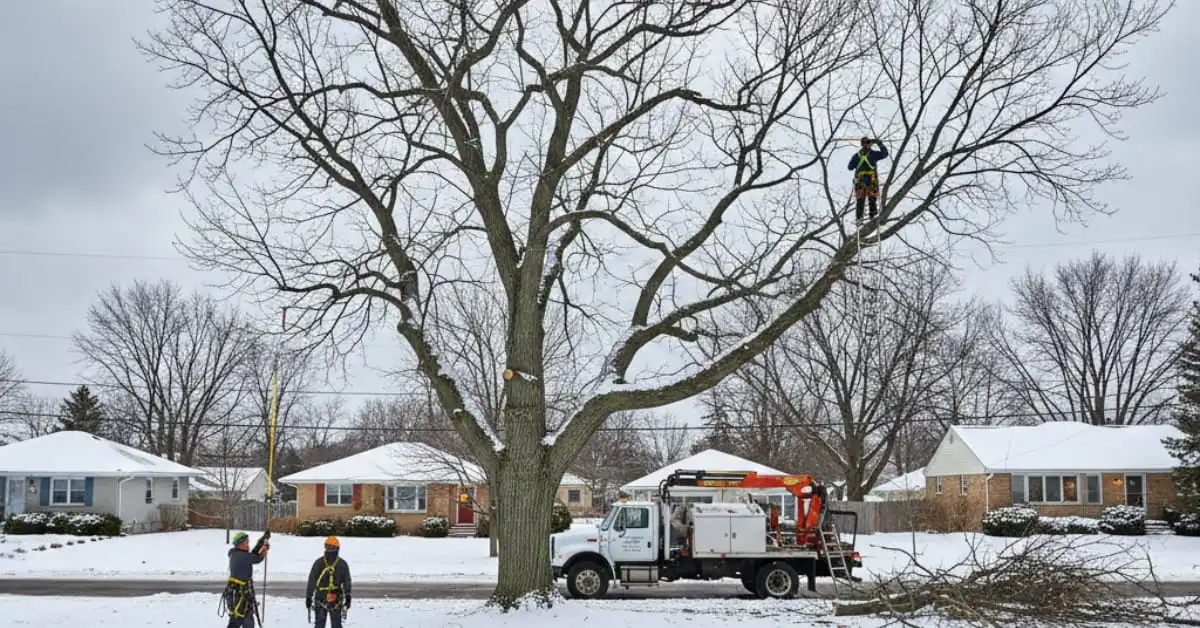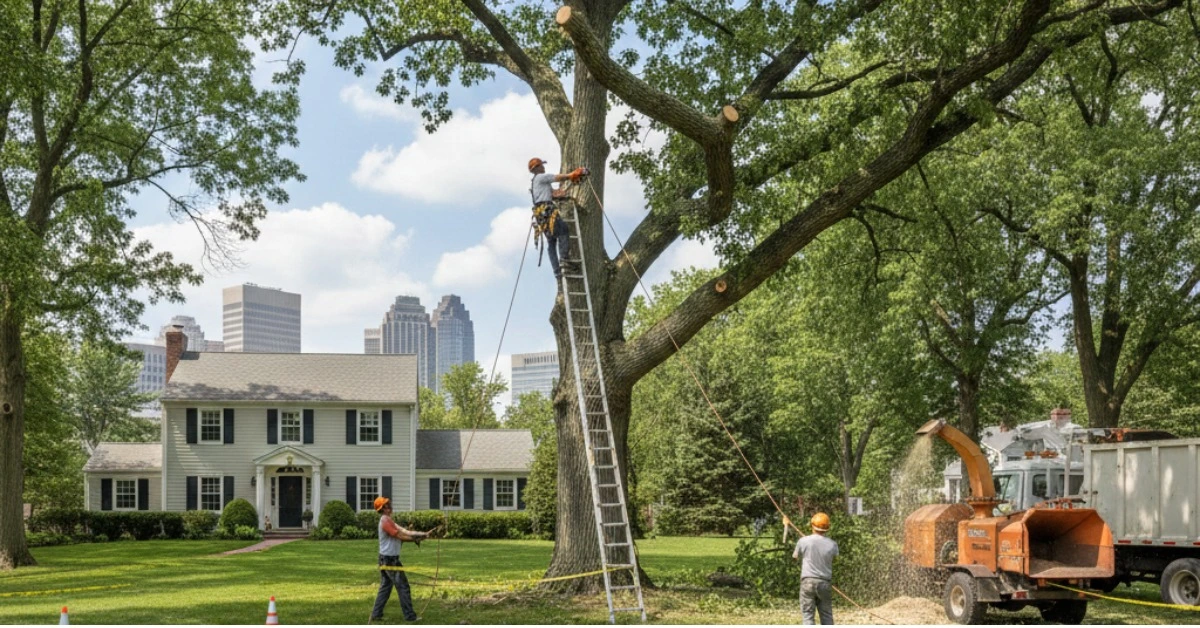
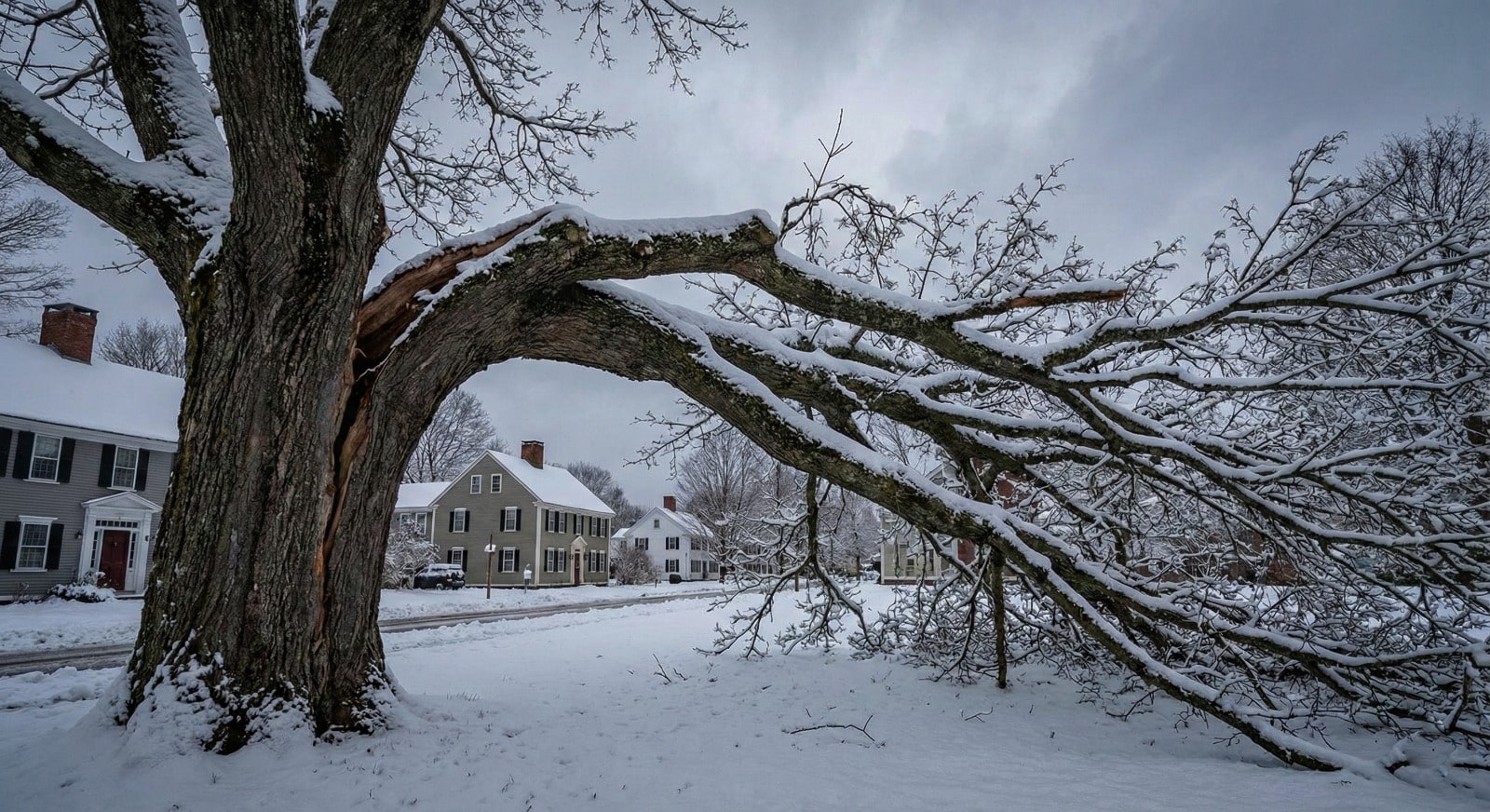
The Amherst winters are characterized by lots of snowstorms. The scenery is beautiful, but the pressure exerted by the snow and ice is enormous, and trees, which already had internal structural issues, are subjected to the influence of these forces.
One of the most valuable things you can do in order to save your property, your family, and your neighbors is to know the warning signs before a huge snowfall.
You can prevent this with an assessment of danger performed with the help of a professional emergency tree service in Amherst; however, dangerous tree signs, which are common signs of a serious threat, can be easily identified by us.
However, in case of any doubt, it is always better to book a tree inspection near me to make sure that a professional arborist can assess the possible problems in the tree’s stability and is ready to provide the appropriate measures ahead of the winter season.
In places such as Amherst, where winter is very long and storms are severe, when the problem of trees is not dealt with at the appropriate time, the costs of cleaning up the storms or creating risky emergency scenarios are high.
The firms like Branch Specialists Buffalo underline the necessity to pay attention to the preventive inspection of the tree hazards to avoid the situation when it is too late.
Let’s See How to Tell if a Tree Will Fall?
Dead or Weak Branches Become Dangerous Under Snowload
Another most frequent tree-falling warning sign is the existence of dead branches. These branches can be either dry, brittle, or not as colored as the rest of the canopy. During winter, the amount of snow that is on these branches adds more weight, and hence they break easily.
The branches cracking under snow may fall unexpectedly and damage property or cause people to suffer. This is particularly hazardous in mature or neglected trees. The first sign to demonstrate that the tree is diseased or stressed is often the dead limbs.
This may, over time, damage the whole canopy and destroy the structure of the tree. A winter-oriented tree inspection in Amherst will be able to evaluate the need to prune or remove trees to avoid winter breakage.
Fractured or falling branches are a sign of underlying issues in most cases, and therefore, any effective tree inspection checklist should include a comprehensive evaluation of the same during storms.
Rot, Decay, and Fungal Growth Weakens the Tree’s Structure
Decay is one of the most ignored yet severe indications of trouble. When you realize tree rot and decay indicators such as fungus growth, spongy, soft wood, or an empty trunk of the tree, it may be too late.
The presence of fungi like bracket fungus or mushrooms around the exposed roots indicates internal decay, which can be unnoticeable. Snow buildup strains it and makes it more dangerous to collapse. This is particularly very important where it contains holes in the trunk, missing bark, or soft and crumbly wood.
Carpenter ants, bark beetles, and termites break into trees that have already been decaying, which increases the damage even more. What starts out as a small rot may eventually give rise to the dead tree in Amherst winters.
When you notice that the fungus is at the bottom or on the trunk and it moves when it is pushed, immediately call an arborist near me, particularly one who offers a free check on the trees.
Experts of emergency tree service Amherst, such as Branch Specialists Buffalo, apply instruments and skills to determine whether the decay has encroached the roots or trunk, and whether a tree removal is necessary.
Leaning Tree Problems Often Signal Root or Trunk Failure
Although leaning of trees is natural, leaning tree problems like a leaning trunk or crown that all of a sudden is aggravated or starts to point somewhere different are a serious alert.
You can tell that there is some root damage when you see that the tree leans more after a recent storm or heavy wind, or when the ground around the tree lifts, or when you see that the roots are cracked or raised, or rotting, or fungal to the roots.
The problem of stability in trees is even more dangerous in the case of heavy snowfall, because the weight of this snow puts pressure on the already weakened roots, and the tree is more likely to fall.
Root problems are concealed underground and thus tend to be ignored by people. However, roots are what keep it grounded, and once they are undermined, even a moderate storm may bring down the entire system.
A tree assessment conducted by a professional on whether you need tree removal in Amherst, New York, in the winter months can help you to decide whether the tree can be salvaged or requires emergency removal.
Cracks in the Trunk and Structural Splits Are Red Flags
The cracks in the trunk, or split trunks, or the presence of cavities are other significant risk factor that increases the risk of winter. Such structural deficiencies are normally aggravated by the weight of the snow and may break away abruptly.
Vertical cracks on the trunk that can be seen with the naked eye, or a deep hole on the trunk, are very likely indicators of internal weakening, particularly with discolorated bark or brittle wood.
These problems normally manifest way before a tree falls, but most homeowners fail to see them before it is too late. These cracks can be detected well in advance through a comprehensive tree hazard inspection and prevented in winter. Based on severity, professionals can prescribe bracing, pruning, or complete removal.
Root Damage, Soil Movement, and Unstable Ground Conditions
Winter storms enhance water content in the ground, and this may reveal or aggravate underlying root problems. Cracked or raised soil or roots, sharp and abrupt soil movement, are all signs that the anchoring system of the tree is not working.
Root issues can be seen in the subtle cases, like sparse or discolored leaves in the earlier years, fungal or mould growth around the base, or tilting in the wind.
Trees with roots damaged by wet heavy snowfall are quickly affected in Amherst, which is a generally urban area with heavy wet snow. Best tree inspection service for winter damage in Amherst NY will check the base and the root flare with care to identify rotting roots, soil instability, or soil movement that the homeowners would have overlooked.
Tree care companies like Branch Specialists Buffalo have embarked on establishing root-related hazards to ensure that the homeowners are able to eliminate the risks before they are hit by storms.
Why Winter Tree Inspections Matter in Amherst
If you are seeking affordable winter tree risk assessment, the homeowners in Amherst usually seek it upon the earliest cases of leaning, cracking, fungus, or abnormal branch severing.
However, there is more to winter inspections than preventative, and they provide peace of mind. Amherst NY, tree service will be able to determine the services required to secure your home and ensure safe winter conditions, pruning, cabling, or removal.
It is possible that snowstorms can turn insignificant tree problems into catastrophes, and it is best to arrange a tree inspection around me before the storms strike, enabling me to avoid the calamity.
In times of an emergency, an emergency tree service Amherst provider will be called to make sure that the dangerous trees are taken care of as fast and safely as possible.
Get more insights: How to Protect Large Trees Before Buffalo’s First Snow: Winter Storm Prep & Safety Checklist – Winter Tree Protection.
Conclusion
The Amherst winter storms are severe, and it is important to be aware of the signs of dangerous trees at the earliest possible time to save your place of residence. Rotting, bending, cracks, and shaky roots; whatever you have, it is best to do it early to avoid expensive and dangerous inspection with an emergency tree service in Amherst.
By a professional, it will keep you ahead of the storm damage, prevent cases of emergencies, and ensure the safety of your property throughout the season.
FAQs
Q1. Before the snow, how do I know whether a tree is dangerous or not?
Watch out for signs of danger, which include leaning, trunk cracks, dead branches, fungus, or bare roots. These are structural weakness that increases in the presence of snow.
Q2. How much, on average, will it cost to inspect the trees?
The cost of tree inspection depends on the size and level of assessment of the tree, yet most companies provide a free tree inspection service to assist in the identification of threats at an early stage.
Q3. Can I contact the Branch Specialist Buffalo for emergency tree removal in Amherst?
Definitely, we offer emergency service with years of experience to ensure your winter safety.